October 5, 2026
High-traffic business facilities require rugged entrance components to withstand relentless daily operation, severe weather exposure, and strict security demands. Choosing industrial-grade door accessories ensures long-term operational performance while reducing maintenance costs for facility managers across various sectors. Professional installation crews rely on specialized components engineered for extreme durability, fire resistance, and code compliance. According to the Business Research Company, the commercial doors industry is predicted to grow more than 8% year-over-year by 2029. Examining the specific hardware selections made by industry experts highlights how robust entrance systems safeguard physical assets, streamline daily foot traffic, and maintain structural integrity under continuous demanding commercial usage conditions.
Selecting Continuous Hinges for Heavy Door Panels
Standard butt hinges often struggle under the weight of oversized entrances, leading to frame sag and latch misalignment over extended operational periods. Specialty installation crews frequently opt for continuous gear hinges that distribute weight evenly down the entire length of the frame assembly. These heavy-duty continuous hinges eliminate stress points on a high-use commercial metal door, preventing common alignment failures and operational binding. Constructed from extruded aluminum alloy or stainless steel, continuous hinges withstand severe forced-entry attempts and harsh atmospheric exposure. Installing continuous hinges ensures smooth pivoting movement, preserves delicate internal latching mechanisms, and dramatically extends the overall operational lifespan of heavily utilized commercial entryway installations.
Installing Heavy Mortise Locks for Maximum Security
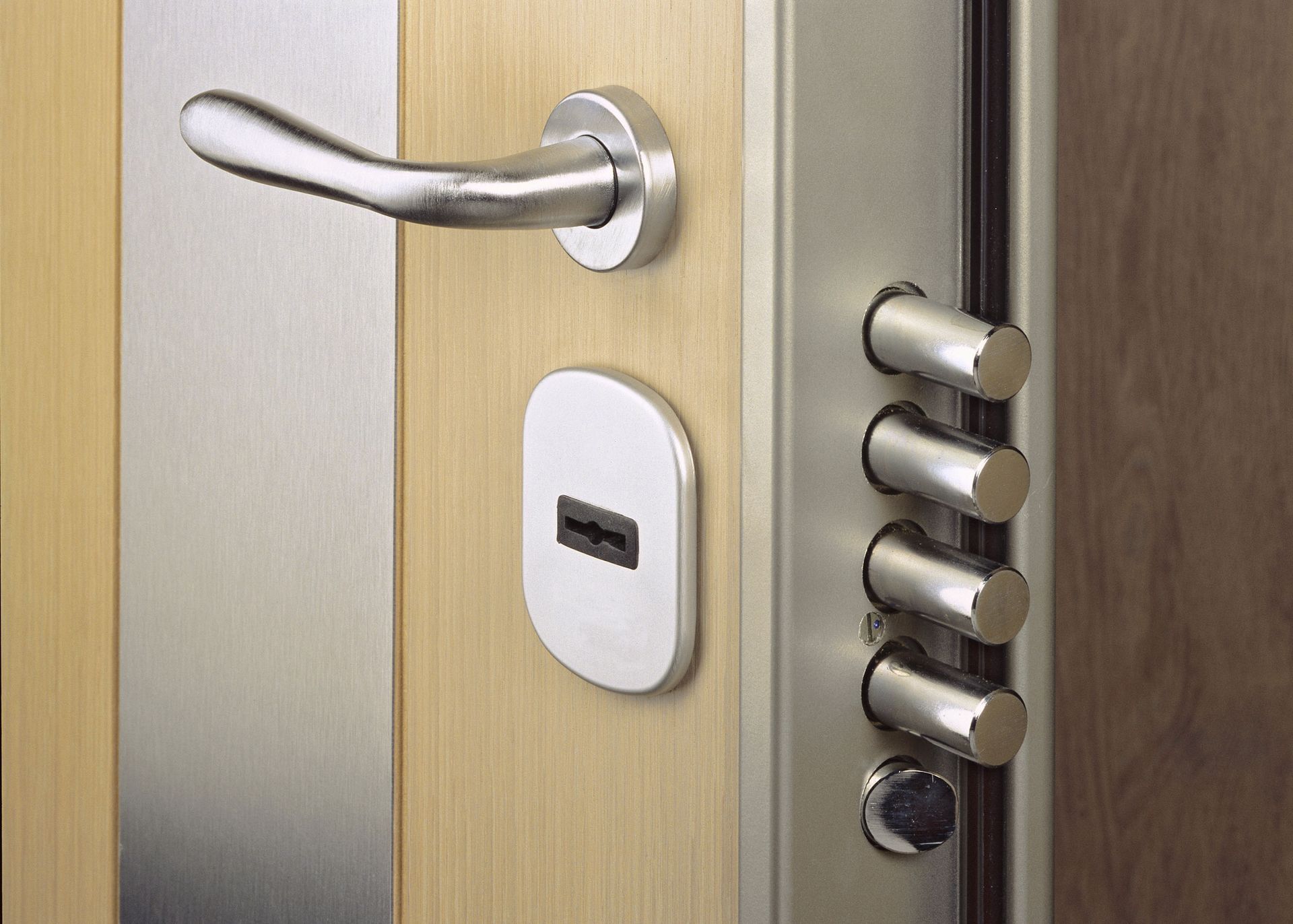
Uncompromising perimeter protection demands mechanical locking mechanisms capable of resisting persistent physical attack and frequent cycle usage. Commercial door specialists consistently specify Grade 1 heavy-duty mortise lock sets for high-security applications across educational, medical, and corporate facilities. These rugged lock sets fit securely inside a factory-cut pocket within a heavy commercial metal door, offering superior resistance against brute-force prying compared to standard tubular locks. Mortise locks feature solid brass or stainless steel deadbolts, hardened steel anti-saw pins, and heavy internal springs. Professional crews select mortise hardware to deliver dependable key control, withstand millions of operational cycles, and protect vulnerable facility entrances against unauthorized intrusion attempts.
Mounting Exit Devices for Emergency Building Evacuation
Ensuring rapid, unimpeded egress during panic situations remains a critical priority for modern architectural building engineers and safety directors. Experienced installation companies select high-grade touchbar panic hardware to facilitate immediate exit capabilities without requiring complex mechanical operations. A spring-loaded crash bar mounted across a rigid commercial metal door allows building occupants to push the portal open effortlessly during emergencies. These exit devices feature heavy-gauge metal housings, solid latch bolts, and optional exterior lever trim for controlled access. Fitting certified exit hardware ensures strict compliance with local life-safety codes, protects building occupants during fire emergencies, and maintains perimeter security during routine business operations.
Fitting Hydraulic Door Closers for Smooth Control
Uncontrolled door swinging poses significant safety hazards to pedestrian traffic while accelerating frame wear and increasing interior heating costs. Industry professionals rely on heavy-duty surface-mounted or concealed hydraulic closers to regulate closing speeds and latching force precisely. A properly adjusted hydraulic closer mounted to a sturdy commercial metal door prevents heavy panels from slamming violently during high wind events. Advanced hydraulic closers feature adjustable cushioning, delayed action valves, and cast-iron housings designed for high-frequency usage environments. Installing commercial-style closers ensures reliable frame latching, preserves air conditioning efficiency, and protects building occupants from unexpected impact injuries near busy building entrances.
Integrating Magnetic Locks With Electronic Access Systems
Modern commercial security strategies increasingly combine heavy mechanical barrier hardware with sophisticated electronic access control network infrastructure. Door installation experts frequently integrate high-holding-force electromagnetic lock systems onto specialized entryways to provide instantaneous locking response. Mounting a high-capacity magnetic lock to a heavy commercial metal door provides up to fifteen hundred pounds of holding force against unauthorized physical entry attempts. These electromagnetic units interface directly with card readers, biometric scanners, keypads, and building fire safety alarms for automated control. Utilizing magnetic locking hardware enables seamless credential management, tracks occupant access logs, and delivers instantaneous emergency lockdown capabilities across sensitive corporate facility zones.
Securing Double Portals With Heavy Flush Bolts
Double-door entryways require specialized locking hardware to secure the inactive leaf before the active panel can latch correctly. Professional installers select heavy-duty surface or concealed mortise flush bolts to pin the secondary panel securely into the top header and threshold. Fitting rigid stainless steel flush bolts into a reinforced commercial metal door establishes a rigid mechanical barrier against forced entry and severe wind pressure. Spring-loaded automatic versions retract seamlessly when the primary active leaf opens, ensuring unobstructed emergency egress. Installing high-strength flush bolts maintains structural alignment across wide openings, prevents draft leakage, and ensures total perimeter integrity for dual-leaf commercial door configurations.
Protecting Building Base Frames With Heavy Thresholds
High-volume foot traffic, loaded hand trucks, and harsh weather conditions rapidly degrade vulnerable floor transitions at exterior building entryways. Professional technicians specify thick, extruded aluminum or bronze heavy-duty thresholds to seal bottom gaps and protect interior flooring materials from moisture intrusion. These heavy thresholds feature slip-resistant surface grooves, thermal barrier breaks, and integrated neoprene seals to block wind-driven rain and cold drafts. Anchoring durable metal thresholds firmly into concrete floor slabs prevents threshold warping under heavy wheeled equipment loads. Quality threshold installations complement overhead closers, enhance weatherproofing efficiency, and provide a smooth, compliant transition for wheelchair users navigating commercial entrances.
Mounting Exterior Kickplates for Surface Impact Protection
Lower door surfaces experience constant impacts from foot traffic, utility carts, cleaning equipment, and heavy luggage being pushed through busy corridors. Installation crews routinely attach thick stainless steel or brass kickplates onto lower door sections to shield core materials from cosmetic and structural damage. Attaching a heavy-gauge protective kickplate across a high-traffic commercial metal door prevents denting, scratching, and moisture absorption at floor level. These metal plates feature bevelled edges and tamper-resistant screws to ensure flush, durable surface mounting. Utilizing protective kickplates maintains clean architectural aesthetics, reduces routine maintenance expenses, and preserves the structural integrity of entryways in demanding institutional environments.
Balancing Heavy Panels With Overhead Concealed Pivot Hinges
Architectural entrance designs requiring clean aesthetic lines often utilize specialized overhead concealed pivot hardware instead of standard surface hinges. Professional technicians install heavy-duty floor and overhead pivot sets to support extremely wide or extra-heavy commercial entry panels smoothly. Concealed pivot systems transfer heavy panel weight directly into the floor structure rather than hanging weight onto side wall frames. Utilizing top and bottom pivots allows heavy doors to swing effortlessly with minimal friction across millions of operational cycles. Specialized pivot installations accommodate custom architectural entrance profiles, deliver precise door alignment, and provide exceptional durability for high-end retail, hotel, and corporate office building entrances.
Selecting high-performance entrance components remains essential for maintaining physical building security, ensuring life safety code compliance, and managing long-term facility operational costs. From continuous gear hinges and mortise lock sets to heavy-duty hydraulic closers and electronic access hardware, every specialized component performs a critical role in preserving entrance functionality. Partnering with experienced installation contractors guarantees that proper hardware combinations are selected for specific traffic demands and environmental exposure levels. Investing in heavy-duty commercial hardware protects physical assets, withstands relentless daily usage, and delivers smooth, reliable portal operation. Prioritizing quality construction hardware ensures long-term building performance, reduced maintenance requirements, and reliable structural protection across all commercial real estate properties.
Are you considering new doors for your business in the state of Georgia? The door experts at Fayette Doors have you covered! Contact us today to learn more about our services or to schedule your next appointment!